Source Barbershop Detangling Comb for Salon, Home, Hotel
Explore 30 barbershop detangling comb options tailored for salon, home, and hotel use. Buyers can compare specifications, customization features, and pricing details to find the right plastic comb for professional or personal styling needs.
Key considerations
Products List


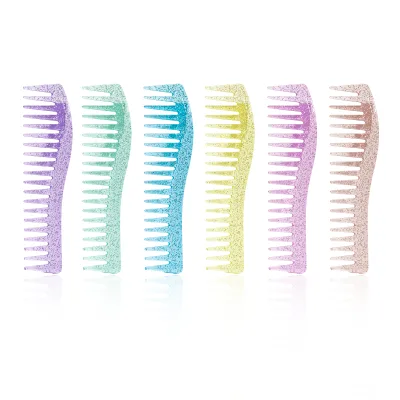


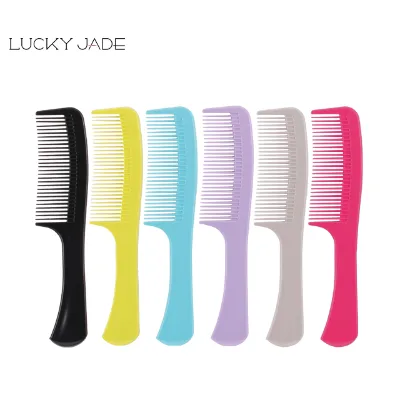


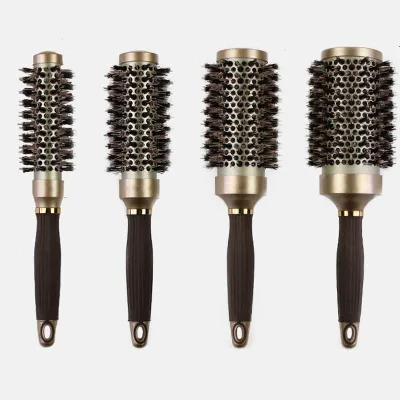
Comprehensive Sourcing Guide
Strategic Sourcing Guide for Barbershop Detangling Combs
Understanding Product Specifications and Material Composition
When sourcing barbershop detangling combs, the primary focus must be on the physical attributes that define performance in a professional setting. The supply market for these tools is characterized by a variety of models, each with distinct dimensional and material profiles. Based on available product data, the core material for these combs is predominantly plastic, with specific variants utilizing TPEE (Thermoplastic Polyether Ester Elastomer). TPEE is a high-performance material known for its flexibility and durability, which is critical for detangling wet or dry hair without causing breakage or static.
The physical dimensions of the combs vary significantly depending on the intended use case, ranging from compact travel sizes to larger salon tools. Observed specifications indicate a wide range of sizes, such as 20.5 cm by 3.4 cm, 27.6 cm by 2.5 cm, and 20.1 cm by 9 cm. Some models feature specific sizing like 25.5 cm by 7.5 cm or 24.2 cm by 8.5 cm, while others are designed for portability at 20 cm by 4.5 cm. The weight of these units also fluctuates, with recorded observations ranging from 25 grams to 94 grams. A heavier comb, such as the 94-gram model, may offer a different tactile feel compared to the lightweight 25-gram option, influencing stylist preference.
Buyers must verify the exact model numbers when placing orders, as these serve as the primary identifiers for specifications. Common model identifiers in the market include AN2264, AN20004-2, AN20004-1, AN3299-1, AM302-1, AN9044, and AC01. Each model corresponds to a specific set of dimensions and weights. For instance, the AN2264 model is associated with specific dimensions, while the AN9044 model has a distinct size profile of 10.5 cm by 21.2 cm. It is essential to cross-reference the model number with the required physical specifications to ensure the tool matches the stylist's workflow. The "Style" attribute is frequently listed as "Fashion," suggesting that aesthetic design is a key differentiator in this category, alongside functional performance.
Application Scenarios and Usage Contexts
The versatility of barbershop detangling combs is a major driver for their procurement. While the core keyword focuses on barbershops, the observed data indicates that these tools are designed for a broader ecosystem of professional and personal care environments. The "Suitable for" attributes explicitly list Salon, Home, Hotel, and Travel as primary application areas. This multi-context suitability means that a single product line can often serve a barbershop's inventory needs while also being marketed for retail sale to customers for home use or for hotel amenities.
In a professional barbershop setting, the "Function" is described as "Hair Salon Beauty Care," and the "Usage" is categorized under "Beauty Hair Salon." This confirms that the tools are engineered to withstand the rigors of daily professional use. The "Feature" attribute often highlights "Professional" and "Comfortable" characteristics, which are non-negotiable for tools used on clients for extended periods. A comb that is comfortable to hold reduces hand fatigue for the stylist, while a professional-grade build ensures longevity under frequent sanitization and heavy handling.
The "Application" field further reinforces the barbershop and salon focus, listing "Barbershop" and "Salon" specifically. However, the inclusion of "Hotel" and "Travel" suggests that these combs are also suitable for hospitality procurement. For example, a hotel might order these combs for guest amenities, while a barbershop might stock them for sale to clients who wish to maintain their style at home. The "AC01" model, for instance, is noted as suitable for Travel, Salon, Home, and Hotel, demonstrating the cross-sector appeal of certain designs. Buyers should consider whether their procurement strategy requires a single SKU that can serve multiple departments or if they need specialized models for specific environments.
Cost Drivers and Minimum Order Quantity Dynamics
Pricing and order volume are critical factors in the B2B procurement of hair care tools. The observed price range for these products spans from $0.16 to $7.20 USD. This wide variance suggests that cost is heavily influenced by material quality, design complexity, and customization levels. The lower end of the price spectrum likely corresponds to standard plastic combs with minimal branding, while the higher end may reflect TPEE materials, custom molding, or premium packaging.
Minimum Order Quantity (MOQ) is another significant cost driver. The data reveals a broad MOQ range, from as low as 200 pieces to as high as 2,400 pieces. Specific models have fixed MOQs; for example, one model requires an MOQ of 1,200 pieces, while another is available at 300 pieces, and a third at 200 pieces. A fourth model lists an MOQ of 600 pieces. These variations indicate that suppliers have different production thresholds. Smaller MOQs (200-300 pieces) are advantageous for startups or buyers testing new product lines, whereas larger MOQs (1,200-2,400 pieces) are typical for established brands seeking economies of scale.
Buyers must calculate the total landed cost, which includes the unit price multiplied by the MOQ, plus shipping and any customization fees. The "Payment" terms observed include options like PayPal or T/T (Telegraphic Transfer), which are standard in international trade. Additionally, the "Package" details, such as "OPP Bag" or "Each One Pack in OPP Bag," affect the per-unit cost. Some listings specify a carton quantity, such as 120 pieces per carton or 240 pieces per carton, which influences logistics and storage planning. Understanding these MOQ and packaging constraints is essential for budgeting and inventory management.
Customization and Branding Opportunities
Private labeling and customization are central to the value proposition of many barbershop detangling combs. The supply chain data consistently highlights "Customization: Available" and "Logo: Accept Customized Logo" or "Custom Logo Accept." This indicates that suppliers are prepared to imprint brand names, logos, or specific designs onto the combs. This capability is vital for barbershops looking to build brand loyalty or for distributors creating their own product lines.
The "Acceptable Private Label" attribute further confirms that suppliers can accommodate specific branding requirements. This often involves modifying the mold or adding a printing step during production. Buyers should verify the feasibility of their logo design regarding the comb's surface area and material. For instance, a TPEE comb might require different printing techniques compared to a standard plastic comb. The "Style" being listed as "Fashion" suggests that customization might also extend to color variations, although specific color options are often listed as "as Picture," implying a standard palette or custom color matching upon request.
The "Servise" (Service) attribute mentions a response time of "Within 24 Hours," which is a positive indicator for communication during the customization process. Buyers should expect to provide artwork files and clear specifications for the logo placement. The "Sample" policy, which offers free samples with freight paid by the buyer, allows for a physical verification of the customization quality before committing to a large order. This step is crucial to ensure that the printed logo is durable and does not rub off during use.
Supplier Evaluation and Compliance Verification
Selecting the right supplier requires a rigorous evaluation process that goes beyond the basic product listing. While the data confirms the "prod_origin" as China, with specific mentions of Guangdong, China, buyers must conduct due diligence to ensure the supplier meets their quality and ethical standards. The observed "Low-confidence background" includes potential certifications such as BSCI, ISO9001, CE, RoHS, REACH, and FSC. However, these should not be assumed to be present without verification. Buyers must explicitly request proof of these certifications from the supplier, as they indicate adherence to international quality management, safety, and environmental standards.
ISO9001 certification, for example, would validate the supplier's quality management system, ensuring consistent production standards. BSCI certification would indicate compliance with social and ethical labor practices, which is increasingly important for modern procurement policies. CE and RoHS certifications are critical for products entering the European market, ensuring that the materials used are free from hazardous substances. REACH compliance is similarly essential for chemical safety. Buyers should treat these certifications as verification points rather than inherent features of the product listing.
When evaluating suppliers, buyers should also assess their capacity to handle the specific MOQs and lead times required. The "prod_packing" details, such as "240PCS/CTN," provide insight into the supplier's logistics capabilities. A supplier that can efficiently pack and ship large quantities is better equipped to handle bulk orders. Additionally, the "Sample" availability is a strong indicator of a supplier's confidence in their product. A willingness to provide free samples (with freight on the buyer) suggests a transparent and customer-focused approach.
Quality Control and Long-Term Procurement Strategy
Ensuring consistent quality is paramount for barbershop tools that are used daily on clients. The "Feature" attributes like "Professional" and "Comfortable" must be validated through physical inspection. Buyers should establish a quality control protocol that includes checking for structural integrity, such as the strength of the teeth and the flexibility of the comb body. For TPEE combs, the material should not crack or become brittle over time. The weight variations observed (25g to 94g) should be consistent within a production batch to ensure uniformity.
Long-term procurement considerations involve building a sustainable relationship with the supplier. The "Payment" terms and "Servise" response times are indicators of the supplier's reliability. A supplier that responds within 24 hours and offers flexible payment terms like T/T or PayPal is generally more reliable. Buyers should also consider the "Usage" context; a comb designed for "Beauty Hair Salon" must withstand frequent washing and sanitization. Testing the comb for resistance to chemicals and heat is advisable.
Furthermore, the "Application" diversity (Barbershop, Salon, Hotel, Home) suggests that buyers should plan for a product lifecycle that spans multiple market segments. A successful procurement strategy might involve ordering a mix of models to cater to different needs. For example, a high-volume, lower-cost model for general use and a premium, customized model for high-end clients. The "MOQ" flexibility allows buyers to start small and scale up as demand grows, mitigating the risk of overstocking.
In conclusion, sourcing barbershop detangling combs requires a balanced approach that considers technical specifications, customization needs, cost dynamics, and supplier reliability. By carefully analyzing the model numbers, dimensions, and material properties, buyers can select the right tools for their specific requirements. Verifying certifications and establishing clear quality control measures will ensure that the procured combs meet the high standards expected in professional barbershops and salons. The wide range of available options, from compact travel sizes to large salon tools, provides ample opportunity for buyers to find products that align with their brand identity and operational needs.
FAQs
What materials are used for barbershop detangling combs?
The primary materials are plastic and TPEE. Plastic is the standard composition for most models, while TPEE variants offer enhanced flexibility and durability for professional salon environments.
Which models are suitable for home and salon use?
Multiple models like AN2264 and AC01 are suitable for both home and salon use. Some variants also extend suitability to hotels and travel, providing versatile options for different application scenarios.
Can I order custom logos on these combs?
Yes, customization is available with options to accept customized logos. Suppliers support private labeling, allowing buyers to add specific branding to the product for their barbershop or retail business.
What is the minimum order quantity for these combs?
Minimum order quantities vary by model, ranging from 200 to 1200 pieces. Specific models like AN20004-1 require 200 pieces, while others may have higher thresholds like 1200 or 2400 pieces.
How are these combs packaged for shipment?
Combs are typically packaged in OPP bags. Carton quantities vary, with some listings specifying 120 pieces per carton and others listing 240 pieces per carton for efficient logistics and storage.
Where are these barbershop combs manufactured?
The products originate from China, with specific mentions of Guangdong as a production hub. This location is the confirmed origin for the listed models and specifications provided in the product data.